





Featured Pathways

More pathways

The Science of Climate Change

Climate change is no longer a distant threat or just a possibility, it is now a reality for all of us. In this pathway, Kevin Trenberth, a renowned climatologist, delves into the science behind climate change. He first introduces the climate system, its main components and forces.

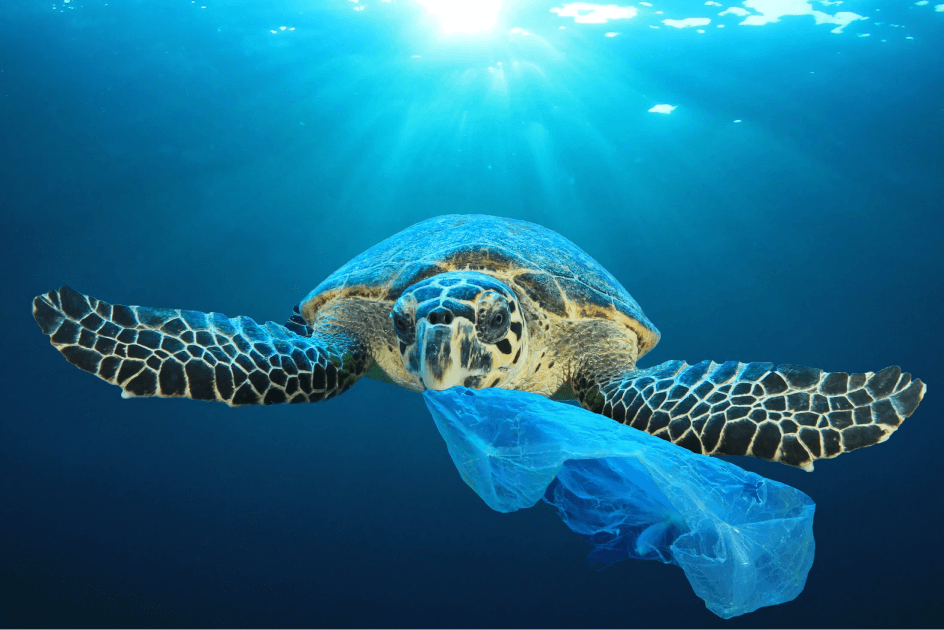
Tackling the Plastic Crisis

Plastic pollution is by far the biggest threat to our oceans and this remains an incredibly tough problem to solve. Plastic credits could potentially serve as one of the much needed solutions for this crisis.

More pathways

Book a demo

Ready to get started?

Our Platform

Expert led content

+1,000 expert presented, on-demand video modules

Learning analytics

Keep track of learning progress with our comprehensive data

Interactive learning

Engage with our video hotspots and knowledge check-ins

Testing & certification

Gain CPD / CPE credits and professional certification

Managed learning

Build, scale and manage your organisation’s learning

Integrations

Connect Sustainability Unlocked to your current platform

Featured Content

More featured content

The Scale of the Net Zero Challenge

The price of meeting net zero is estimated to be between $100-150 trillion over the next 30 years. Regardless of this cost, we need to reach net zero before climate change does irreversible damage to the environment and the economy.

ESG, Sustainability and Impact Jargon Buster

ESG, sustainability, impact… they all just mean green, right? Not quite. Despite being used often interchangeably, there are distinct differences between these terms.

More featured content

Book a demo

Ready to get started?

Featured Pathways

More pathways

The Science of Climate Change

Climate change is no longer a distant threat or just a possibility, it is now a reality for all of us. In this pathway, Kevin Trenberth, a renowned climatologist, delves into the science behind climate change. He first introduces the climate system, its main components and forces.

Tackling the Plastic Crisis

Plastic pollution is by far the biggest threat to our oceans and this remains an incredibly tough problem to solve. Plastic credits could potentially serve as one of the much needed solutions for this crisis.

More pathways

Book a demo

Ready to get started?

Our Platform

Expert led content

+1,000 expert presented, on-demand video modules

Learning analytics

Keep track of learning progress with our comprehensive data

Interactive learning

Engage with our video hotspots and knowledge check-ins

Testing & certification

Gain CPD / CPE credits and professional certification

Managed learning

Build, scale and manage your organisation’s learning

Integrations

Connect Sustainability Unlocked to your current platform

Featured Content

More featured content

The Scale of the Net Zero Challenge

The price of meeting net zero is estimated to be between $100-150 trillion over the next 30 years. Regardless of this cost, we need to reach net zero before climate change does irreversible damage to the environment and the economy.

ESG, Sustainability and Impact Jargon Buster

ESG, sustainability, impact… they all just mean green, right? Not quite. Despite being used often interchangeably, there are distinct differences between these terms.

More featured content

Book a demo

Ready to get started?

Book a demo

Ready to get started?

How to Cut Building Carbon Before It’s Built

How to Cut Building Carbon Before It’s Built

Philippa Gill

20 years: Real estate investment

Cutting building emissions? No problem. Join Philippa Gill to explore how smart material choices, renewable energy, and efficient design work together.

Cutting building emissions? No problem. Join Philippa Gill to explore how smart material choices, renewable energy, and efficient design work together.

Subscribe to watch

Access this and all of the content on our platform by signing up for a 7-day free trial.
How to Cut Building Carbon Before It’s Built

14 mins 11 secs

Key learning objectives:

  • Identify energy efficiency strategies

  • Define embodied carbon and how to reduce it

  • Understand how to integrate renewable energy

Overview:

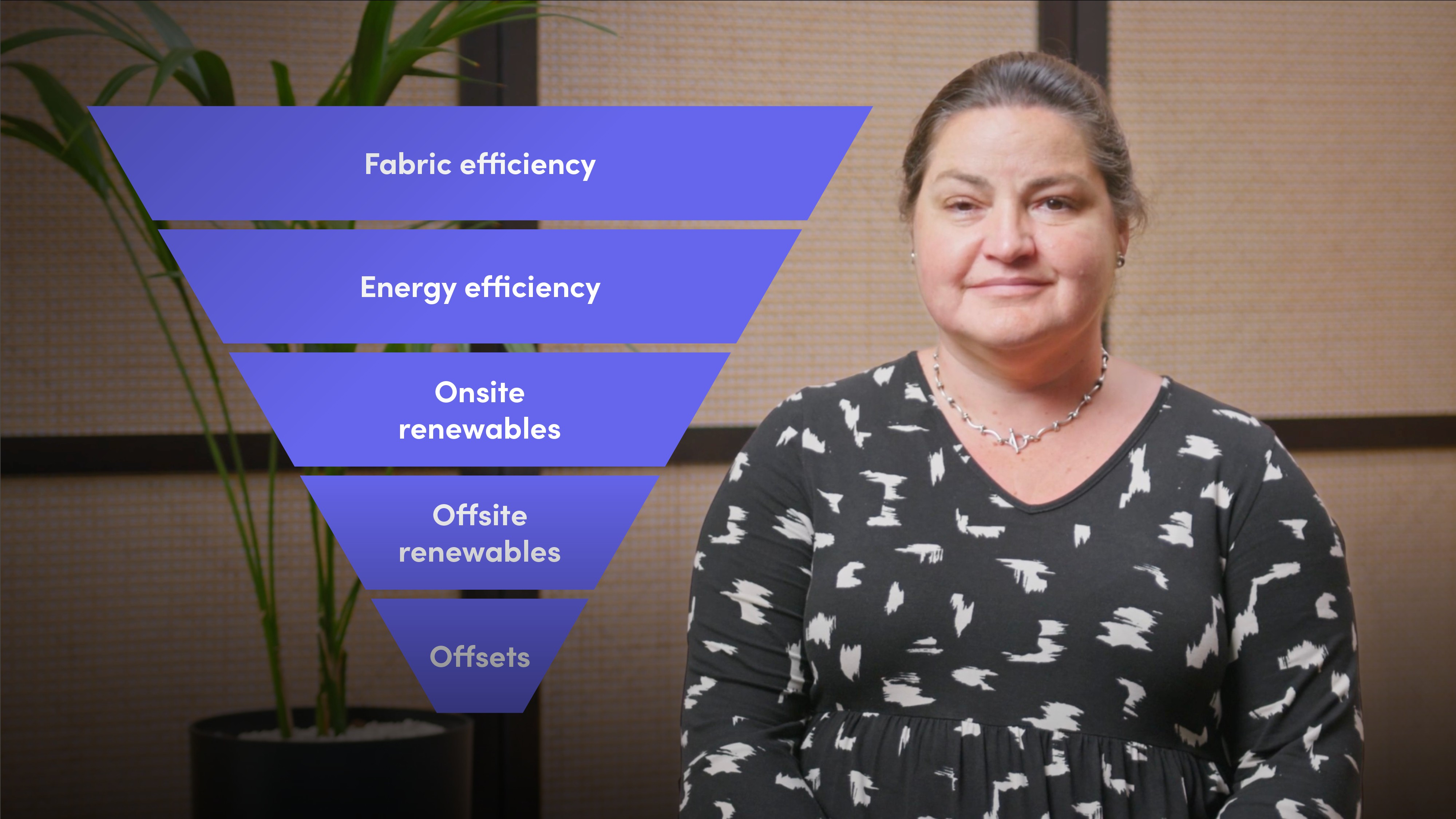
Energy efficiency begins with passive design - optimising building orientation, natural ventilation, insulation, and window glazing. Efficient HVAC systems, lighting, occupancy controls, and programmable timers further reduce energy consumption. Regular monitoring and adjustment of operational settings ensures systems run efficiently according to seasonal or occupancy changes. Renewable energy can further decarbonise buildings once efficiency and material impacts are addressed.

Subscribe to watch

Access this and all of the content on our platform by signing up for a 7-day free trial.

Summary
What are effective energy efficiency strategies for buildings?
Energy efficiency begins with passive design - optimising building orientation, natural ventilation, insulation, and window glazing to minimise the need for mechanical heating and cooling. Efficient HVAC systems, LED lighting, daylight sensors, occupancy controls, and programmable timers further reduce energy consumption. Regular monitoring and adjustment of operational settings ensures systems run efficiently according to seasonal or occupancy changes. Maintenance programmes and occupant behaviour also play a critical role, with simple strategies such as ventilating overnight or using shading helping reduce energy demand naturally.

What is embodied carbon in the build environment? 
Embodied carbon refers to the total CO₂ emissions released during the extraction, manufacturing, transport, and installation of building materials.

How can embodied carbon be reduced?
  1. Concrete: Mainly from cement production, mitigated by substituting materials like fly ash or using low-carbon alternatives.
  2. Steel: Energy-intensive but infinitely recyclable; design optimisation using BIM or digital twins can reduce the volume required.
  3. Timber: Cross-laminated timber (CLT) offers lower embodied emissions, structural strength, and positive effects on wellbeing

How can renewable energy be integrated into buildings?
Renewable energy can further decarbonise buildings once efficiency and material impacts are addressed. Key approaches include solar panels (PV) and battery storage to generate and store electricity for on-site use, reducing reliance on the grid. Green roofs provide insulation and lower cooling demand while supporting biodiversity. Wind and geothermal systems offer efficient, low-maintenance energy solutions. Local or district energy microgrids draw energy from nearby renewable sources, improve resilience, and support community-level energy efficiency.

Subscribe to watch

Access this and all of the content on our platform by signing up for a 7-day free trial.

Philippa Gill

Philippa Gill

Philippa joined EVORA Global in January 2020, initially to focus on the expansion into Europe and our Climate Resilience Services. Given her background in private equity real estate, she brings deep knowledge of investment drivers and associated risk factors. She continues to sponsor our Social Wellbeing and EVOLVE education service lines at Executive level, while also providing senior strategic support to a number of Evora’s key global clients.

There are no available Videos from "Philippa Gill"