














Ten years post-Paris: A decade that defied predictions

John Lang
Founder of Net Zero Tracker
What do we know now that we didn't know back in 2015?
It’s not often you get to tell a positive story about climate. But ten years after the Paris Agreement, the data tells one.
When nearly 200 nations struck the landmark deal in December 2015, analysts and commentators were cautious, some outright sceptical. That year’s forecasts from BP and the International Energy Agency (IEA) assumed only modest growth in renewables. Electric vehicles (EVs) were niche and expensive. Fossil fuels were expected to dominate for decades.
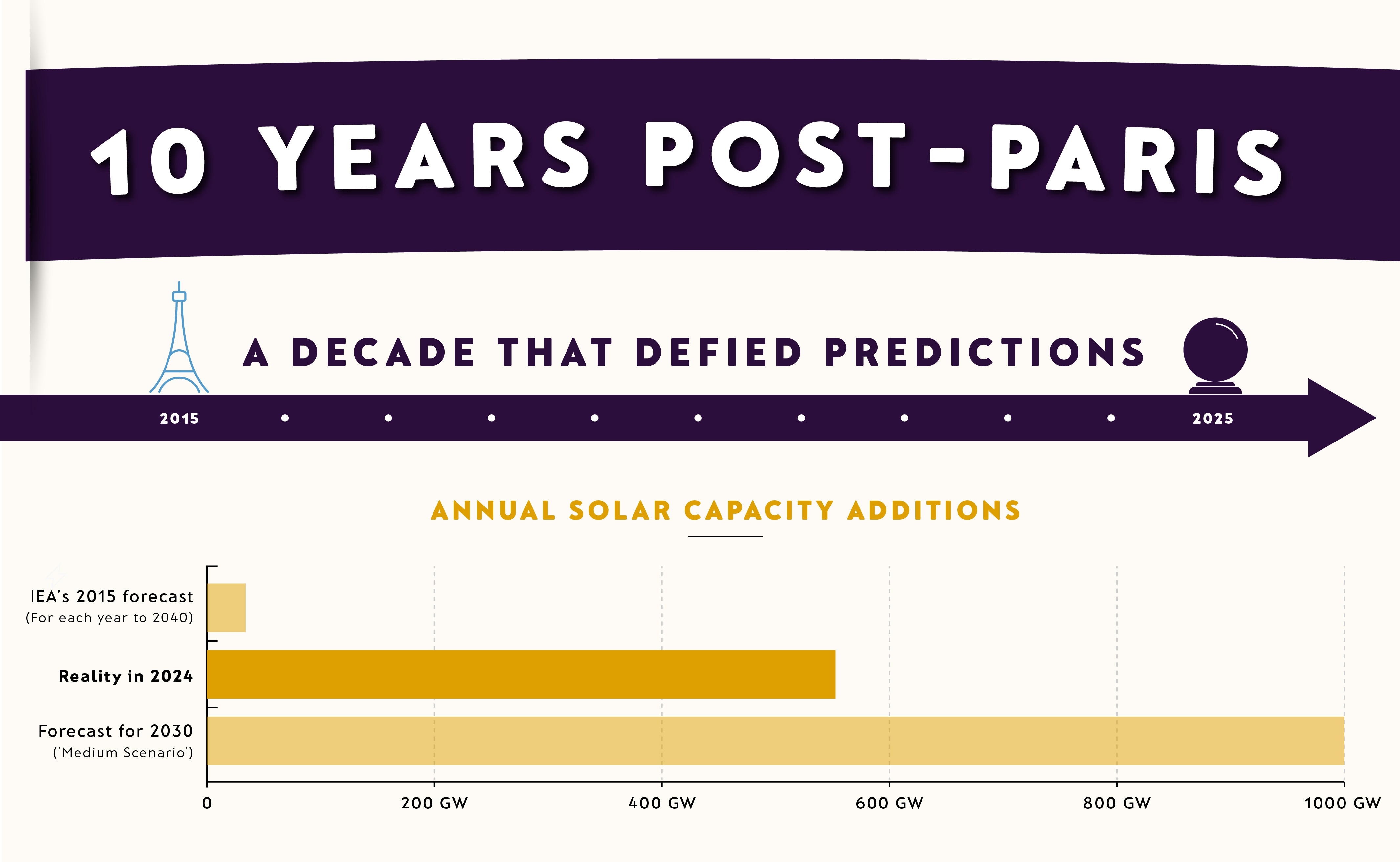
Ten years on, those forecasts look quaint. The clean energy transition hasn’t just accelerated, it has blown past expectations. Global non-fossil generation, which BP thought would hit 38% by 2035, has already reached 41%. Solar power, dismissed as uneconomic by The Economist in 2014, became ‘the cheapest electricity in history.’ In 2024, the world installed 553 gigawatts of solar capacity, fifteen times more than the IEA predicted a decade ago. Wind kept pace too, and together they now generate more power than coal. Renewables are close to outpacing electricity demand growth in many regions. Early German and UK subsidies for solar and offshore wind — once written off as economic malfeasance — proved global gifts.
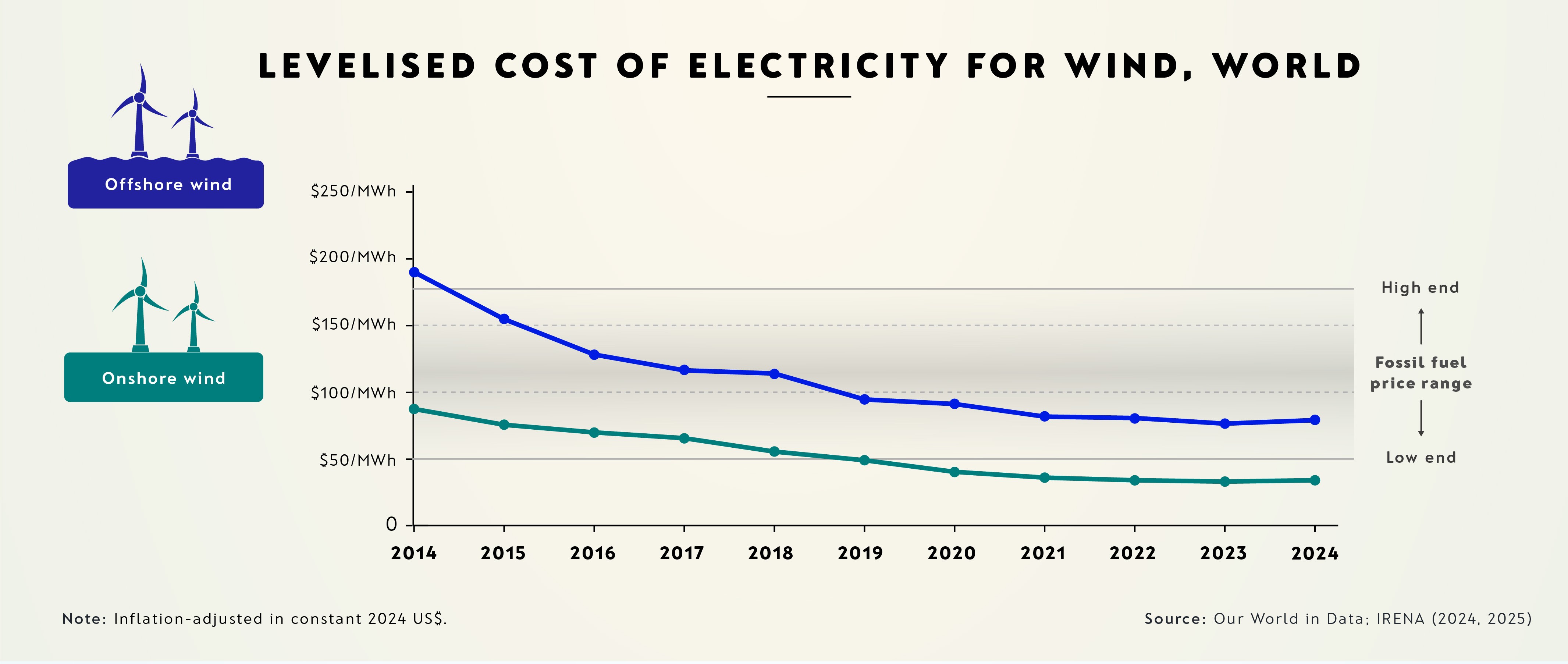
The cost of electricity for wind has dropped globally from 2014 to 2025
On the policy front, climate framework laws have tripled since 2015, many embedding carbon budgets, expert advice and legal ‘metronomes’ for long-term decarbonisation. National-level climate policy tools are up seven-fold since 2015. Despite Trump’s rollbacks, net zero targets still cover 83% of the global economy, most now enshrined in law or policy; 19 of the G20 still target net zero by mid-century.
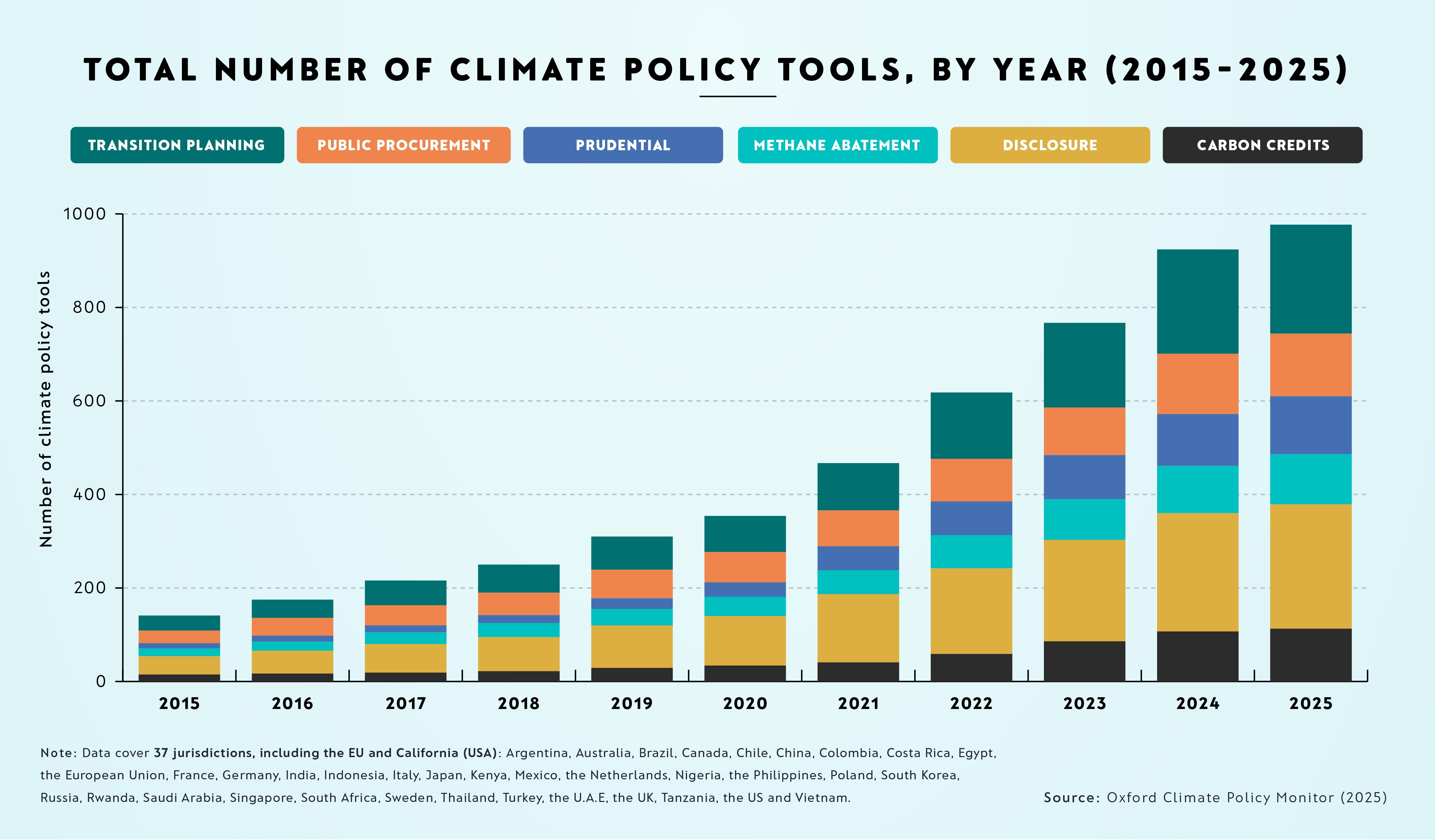
Climate policy tools have increased seven-fold since 2015
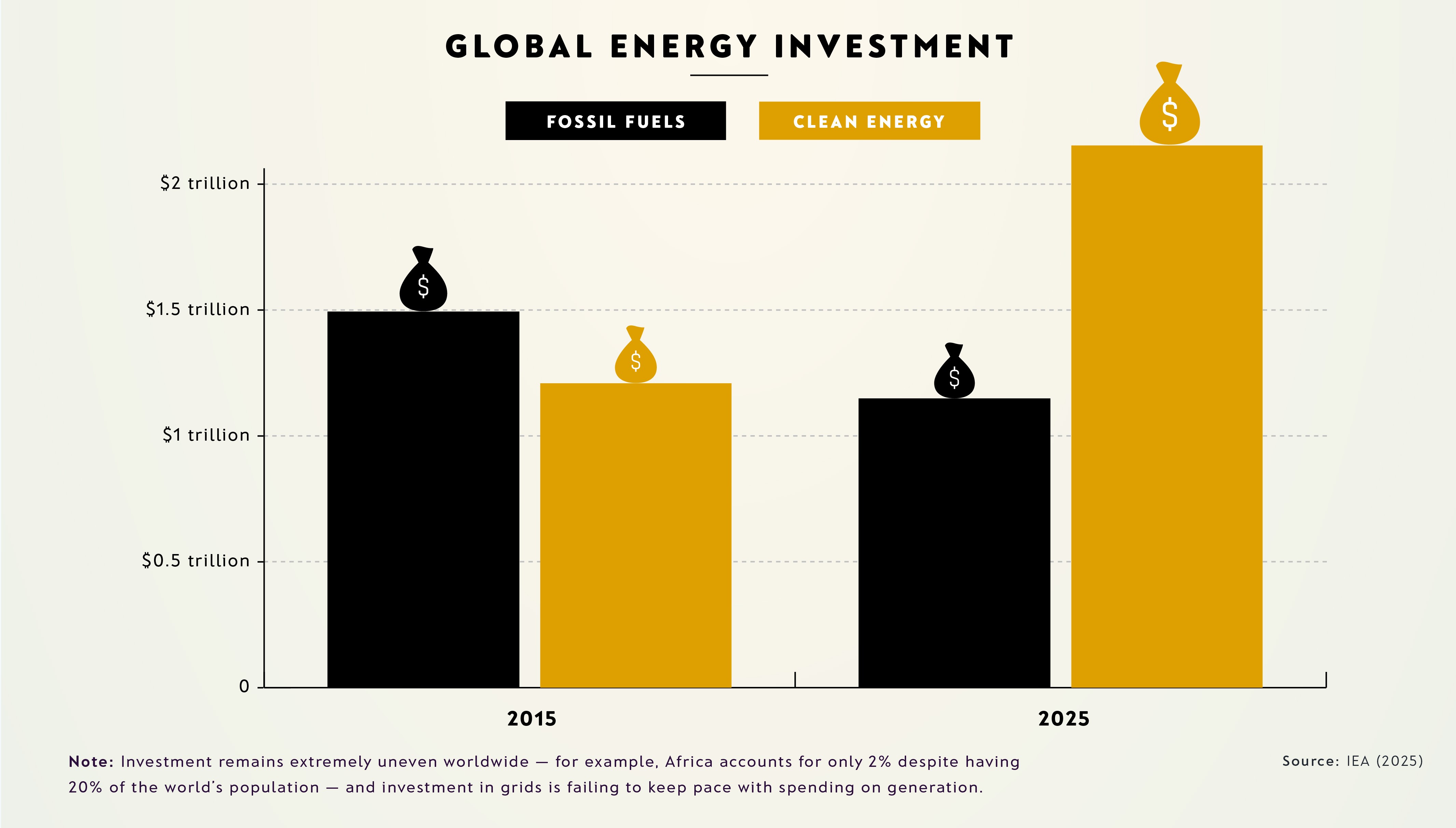
Clean energy investment is now double that of fossil fuels
The effects of this progress are cascading through the economy. Clean energy investment is now double that of fossil fuels, led by the US, EU, China and India. EVs have surged to 20% of global new car sales and are on track to reach 40% by 2030, a decade ahead of IEA’s 2015 projections. In 2015, the world hoped for 100 million EVs by 2030. We’re now on course to reach that milestone in 2027. In China and the UK, the clean energy economy is growing three times faster than the broader economy. Jobs in clean energy — now over 36 million globally — outnumber those in oil, gas, coal and fossil-engine manufacturing combined. Clean energy is creating new export markets, cutting input costs, increasing energy security and reshaping geopolitics.
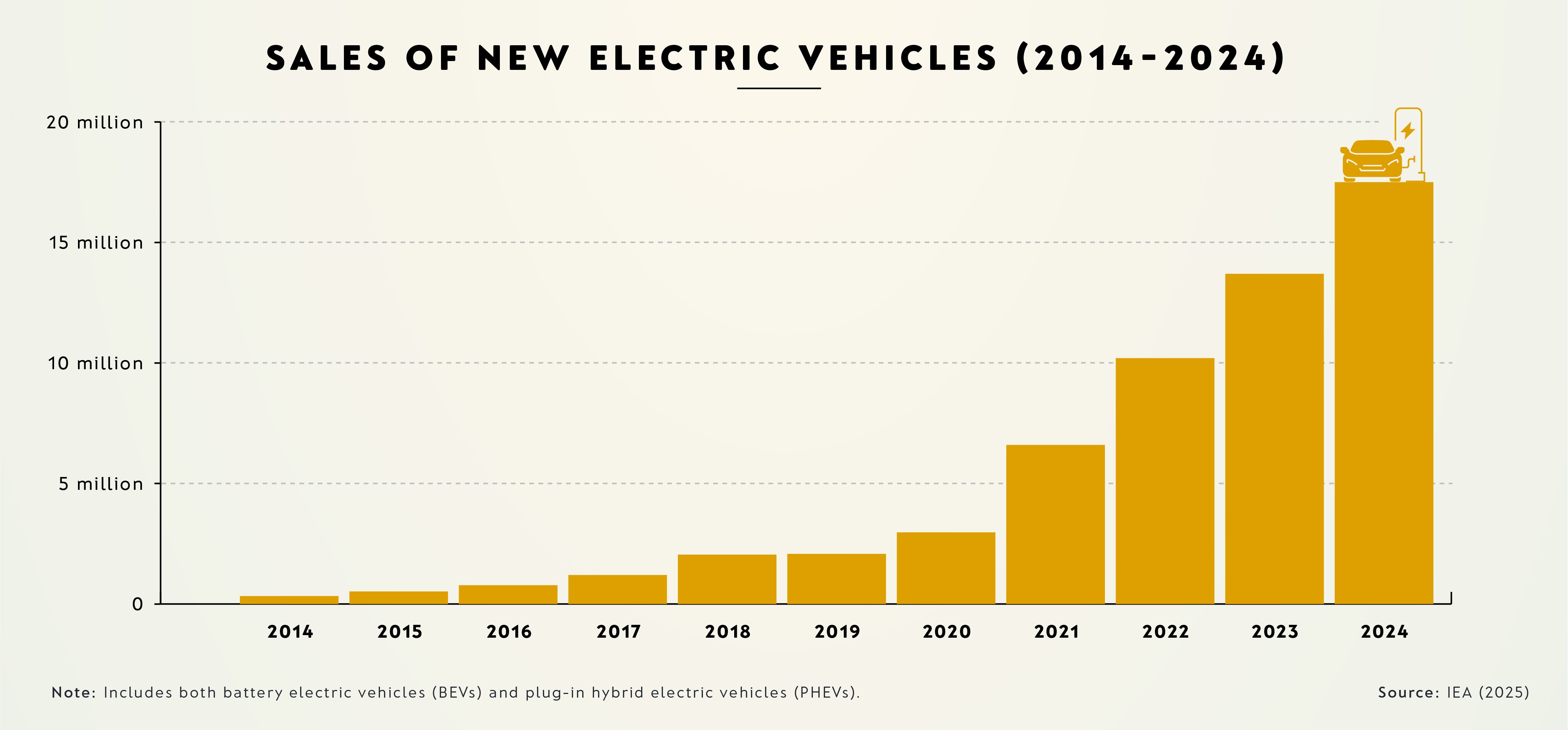
Electric vehicles have surged to 20% of global new care sales
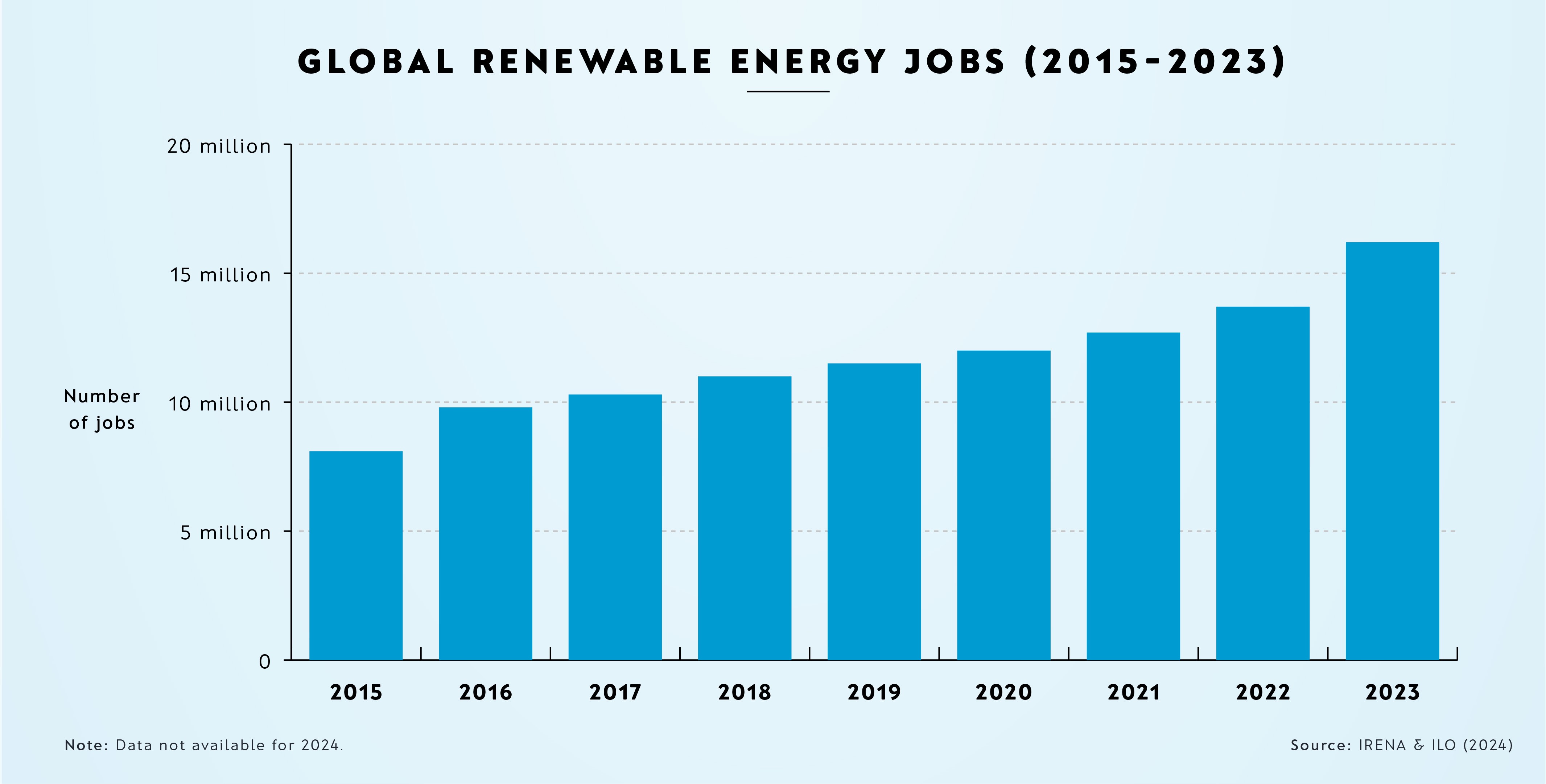
Jobs in clean energy outnumber those in oil, gas, coal and fossil-engine manufacturing combined
Most importantly, global CO2 emissions have plateaued. Between 2005 and 2015, they rose by 18%. Since Paris, they’ve edged up by about 2%. More broadly, annual GHG emissions growth has slowed fivefold — from 1.7% a year in the decade before Paris to 0.3% in the decade after. We’re at, or very near, peak emissions.
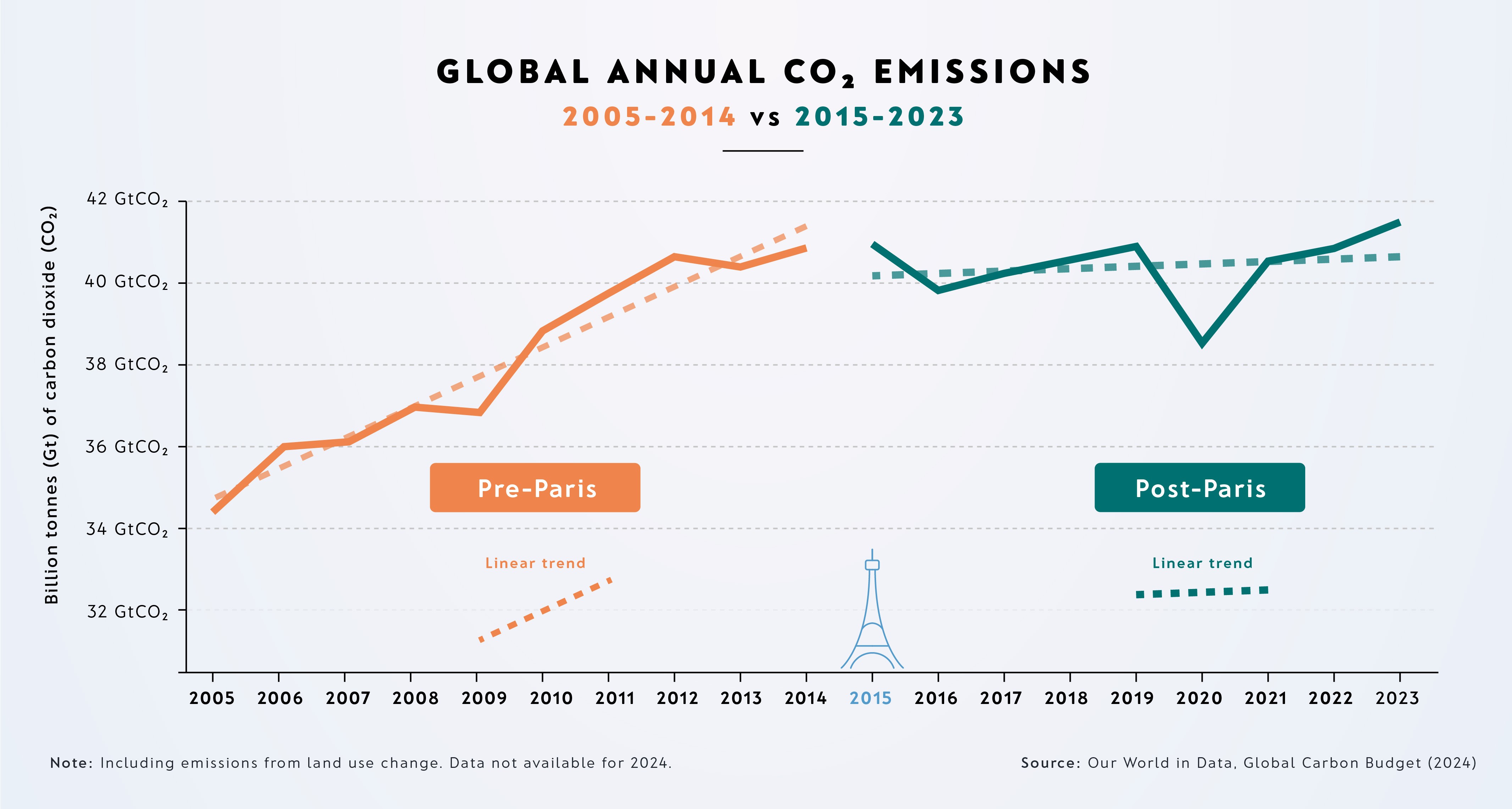
Global CO2 emissions have plateaued, edging up by about 2% since 2015
Of course, to meet the Paris temperature goals and achieve net zero by mid-century, global emissions must decline, not simply flatten. The speed and depth of that shift will depend on the strength and consistency of policy action — and what happens in China, the world’s biggest emitter. We can be cautiously optimistic: clean energy growth has already helped China’s CO2 emissions fall by 1% year-on-year in the first half of 2025, extending a declining trend that began in March 2024.
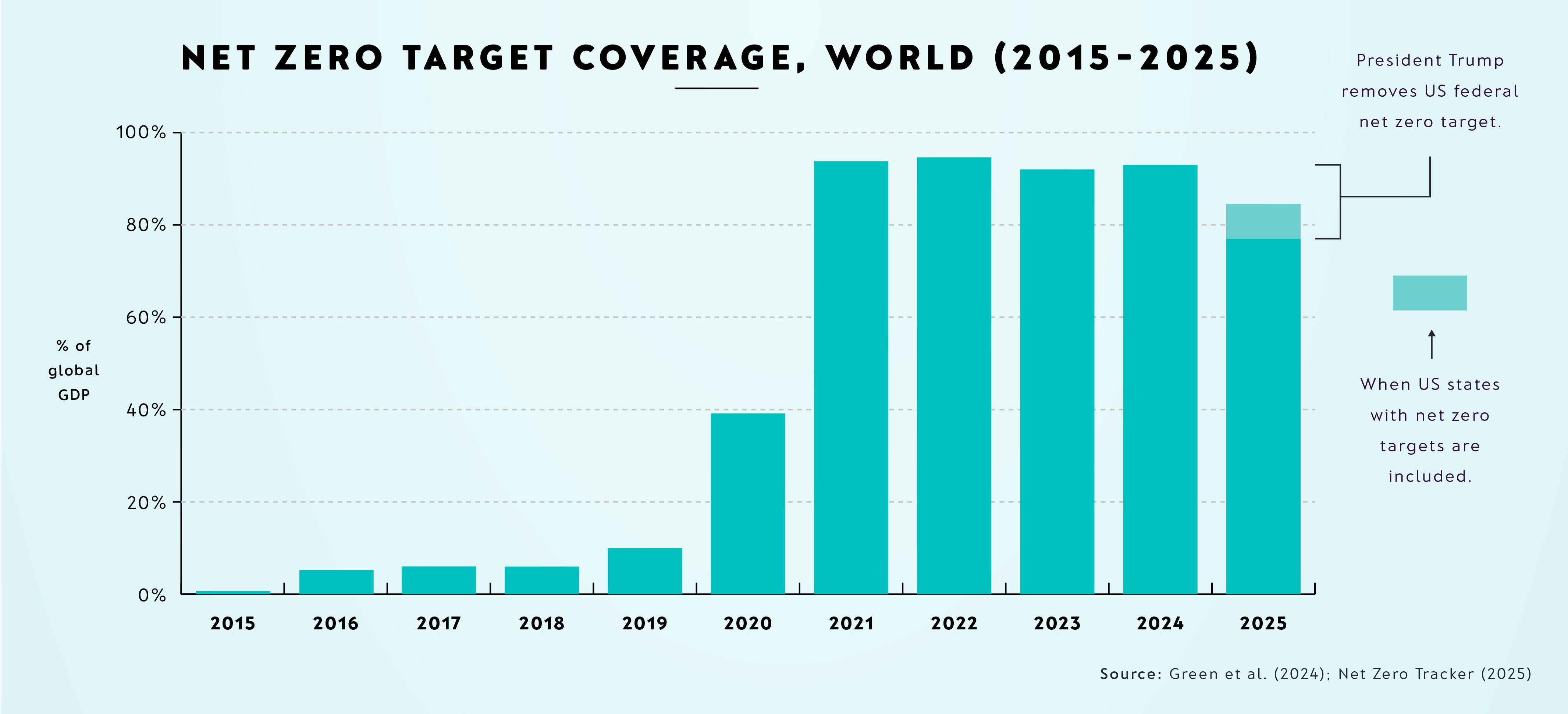
Net zero targets still cover 83% of the global economy, most now enshrined in law or policy
The Paris Agreement’s greatest achievement was to send an incontrovertible signal that the world intended to stop climate change. Policymakers, markets and entrepreneurs mobilised, creating feedback loops of ambition and innovation still compounding today. When global emissions finally enter structural decline, it will mark the end of the beginning of global climate action. But as Bill McKibben warns us, ‘winning slowly is the same as losing.’ Even if stated policies are delivered in full, we’re still heading for around 2.6°C of heating this century, far beyond the bounds of climate safety.
The next test comes at COP30 in Brazil, where countries are expected to submit upgraded carbon-cutting plans to 2035. The Brazilian presidency aims to align energy, nature and livelihoods through its Global ‘Mutirão’ — a collective effort to close the finance gap, protect forests and accelerate the shift from fossil fuels to renewables. If the past decade was about proving the clean energy transition could happen faster than anyone imagined, the next has to make it fairer, deeper and more durable. Progress can beget more progress, not just in gigawatts and gigatonnes, but in finance flows and resilience. Renewables growth has to beat demand growth year after year, and we need to electrify everything, taking electricity from one-fifth of global energy to about two-thirds.
The global energy transition is unstoppable, but it is slow-downable. Populism, protectionism, ideological warfare and fiscal tightening have slowed progress. With the US stepping back twice under Trump’s reversals, China has filled the leadership vacuum — expanding its clean-tech base and financing renewables across the Global South, slashing emissions along the way. Developing nations, which did least to cause the problem and are most exposed to its effects, still face steep barriers to affordable finance and technology. Closing that gap, investing in grids and rebuilding trust in multilateralism are the challenges of the next decade. Countries and companies that bet on the shift to cleanly-generated electrons will win. Those that hedge will lose ground.
The lesson of the last ten years is simple: policy signals and cooperation matter; naysayers don’t. The Paris Agreement showed what happens when intent combines with S-curves. The next ten years will determine whether this momentum delivers the first sustained decline in global emissions, the start of the next chapter of climate action.
See the full infographic and report analysis:

John Lang
Share "Ten years post-Paris: A decade that defied predictions" on
Latest Insights

El Niño: Everyone is talking about it. But what does it actually mean for your business?
1st October 2026 • Maria Coronado Robles

Sustainability training for employees: a practical guide for organisations
21st June 2026 • Learning Adviser