















What Curiosity Type Are You?

Ruth Wandhöfer
Global Fintech Specialist
What type of curious person are you? Join Ruth Wandhöfer and explore the five dimensions of curiosity.

What type of curious person are you? Join Ruth Wandhöfer and explore the five dimensions of curiosity.
Subscribe to watch
Access this and all of the content on our platform by signing up for a 7-day free trial.
What Curiosity Type Are You?
7 mins 22 secs
Key learning objectives:
Identify the different types of curious people
Understand the five dimensions of curiosity
Overview:
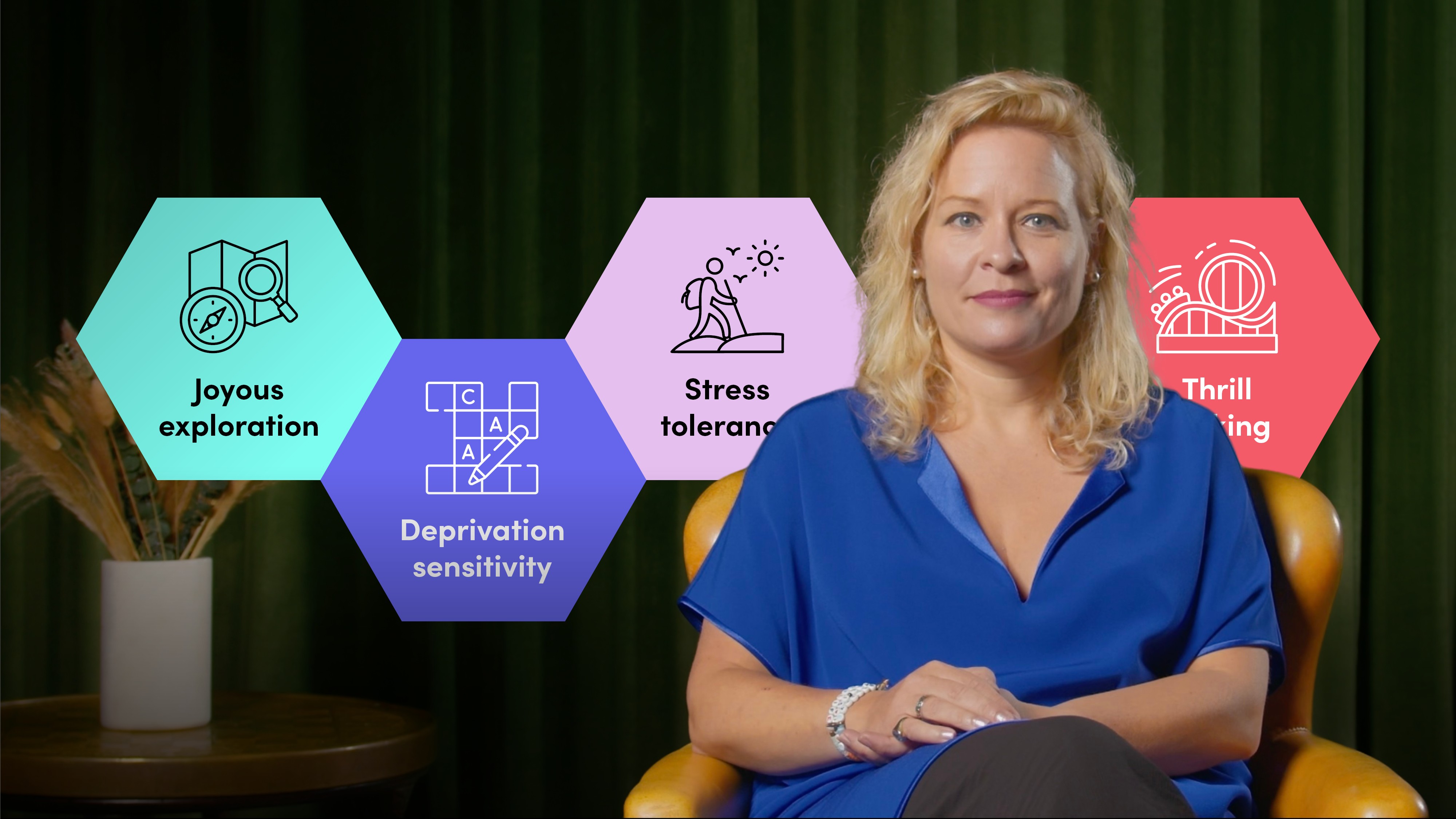
Dr. Todd Kashdan identified the five dimensions of curiosity: joyous exploration, deprivation sensitivity, stress tolerance, social curiosity and thrill seeking. Each dimension influences how people engage with the world and how they pursue new experiences, shaping both personal growth and interactions with others. Researchers have identified four types of curious people, each defined by their dominant curiosity traits: the fascinated, problem solvers, emphasisers and the avoiders.
Subscribe to watch
Access this and all of the content on our platform by signing up for a 7-day free trial.
Summary
How does curiosity impact longevity and brain health?
Curiosity has a profound impact on longevity and brain health. A study from 1996 tracked over a thousand ageing individuals and found that those who maintained higher levels of curiosity were more likely to be alive five years later, even when accounting for other risk factors. This is because curiosity stimulates the brain's reward centres, which are regulated by dopamine. Higher levels of dopamine are linked to brain health, while low levels are associated with brain decline. Thus, maintaining a sense of wonder and curiosity can contribute to a longer, healthier life.
What are the five dimensions of curiosity, and how do they shape our behaviour?
Dr. Todd Kashdan identified the five dimensions of curiosity:
- Joyous Exploration: This dimension represents the core of curiosity, where individuals seek knowledge and enjoy learning purely for the joy of it. This type of curiosity drives people to explore new subjects, read books, and immerse themselves in learning
- Deprivation Sensitivity: This dimension focuses on problem-solving and closing knowledge gaps. It's driven by a need to resolve puzzles or questions that cause discomfort until they are answered
- Stress Tolerance: Here, curiosity involves embracing uncertainty and anxiety as individuals delve into the unknown. This dimension pushes people out of their comfort zones into new and challenging experiences
- Social Curiosity: This type of curiosity is about understanding human behaviour. It's the drive to learn about others' thoughts and feelings, often by observing or engaging in conversations
- Thrill Seeking: This dimension involves seeking out new, intense, and sometimes risky experiences. It’s the kind of curiosity that might lead someone to try extreme sports or adventurous activities
What types of curious people exist based on their dominant curiosity traits?
- The Fascinated: These individuals are high on all dimensions of curiosity, particularly joyous exploration. They constantly seek new knowledge and experiences, driven by a profound sense of wonder
- Problem Solvers: High in deprivation sensitivity, these people are motivated by the need to solve problems and close knowledge gaps. They enjoy tackling complex issues and finding solution
- Emphasisers: With a strong focus on social curiosity, emphasisers are deeply interested in understanding others' thoughts and feelings. They are excellent listeners and enjoy engaging in conversations to learn about different perspectives
- Avoiders: Scoring low on all dimensions of curiosity, especially stress tolerance, avoiders tend to shy away from new or challenging experiences, preferring familiar outcomes
Subscribe to watch
Access this and all of the content on our platform by signing up for a 7-day free trial.
Ruth Wandhöfer
Dr. Ruth Wandhöfer has been revolutionising finance for 19 years, merging finance, technology, and regulation. A leader in digital finance, she shapes the future with innovative strategies and business models.
Starting with Citi, Ruth has held influential roles, now serving on the boards of Permanent TSB, Aquis Exchange Group, and others. As a Partner at Gauss Ventures, she drives early-stage FinTech investment. Appointed by HM Treasury as Chair of the Payment Systems Regulator Statutory Panel, she also advises globally on financial systems.
Ruth’s accolades include top spots on the ‘Women in Fintech Powerlist’ and recognitions as a leading Fintech Influencer. She has published three books, holds multiple degrees, and earned a PhD on “Technology Innovation in Financial Markets.” A Visiting Professor, her insights appear in FT, Forbes, and more.
There are no available Videos from "Ruth Wandhöfer"