






Featured Pathways

More pathways

The Science of Climate Change

Climate change is no longer a distant threat or just a possibility, it is now a reality for all of us. In this pathway, Kevin Trenberth, a renowned climatologist, delves into the science behind climate change. He first introduces the climate system, its main components and forces.

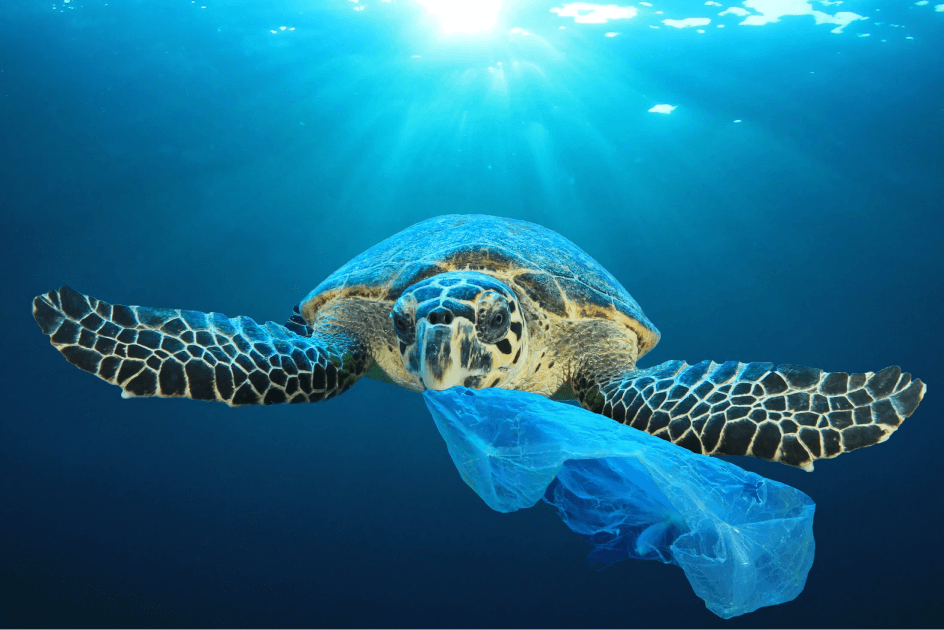
Tackling the Plastic Crisis

Plastic pollution is by far the biggest threat to our oceans and this remains an incredibly tough problem to solve. Plastic credits could potentially serve as one of the much needed solutions for this crisis.

More pathways

Book a demo

Ready to get started?

Our Platform

Expert led content

+1,000 expert presented, on-demand video modules

Learning analytics

Keep track of learning progress with our comprehensive data

Interactive learning

Engage with our video hotspots and knowledge check-ins

Testing & certification

Gain CPD / CPE credits and professional certification

Managed learning

Build, scale and manage your organisation’s learning

Integrations

Connect Sustainability Unlocked to your current platform

Featured Content

More featured content

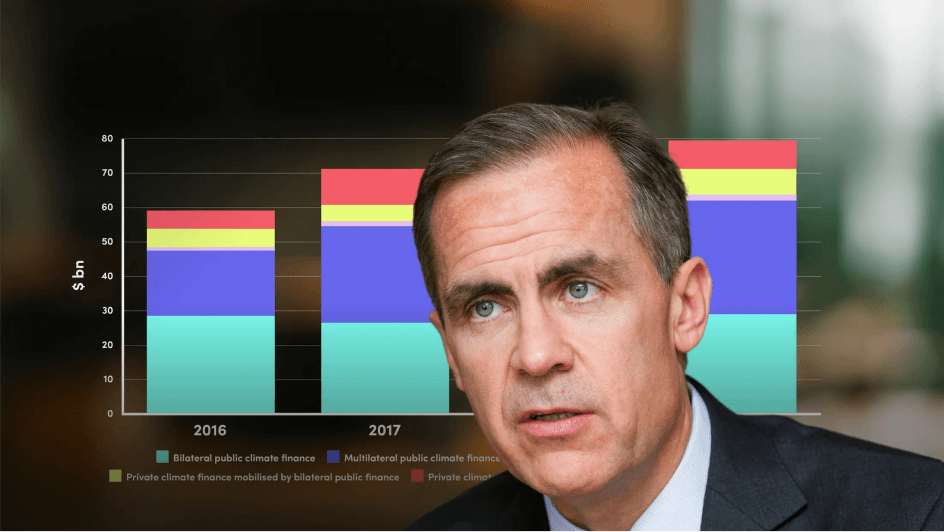
The Scale of the Net Zero Challenge

The price of meeting net zero is estimated to be between $100-150 trillion over the next 30 years. Regardless of this cost, we need to reach net zero before climate change does irreversible damage to the environment and the economy.

ESG, Sustainability and Impact Jargon Buster

ESG, sustainability, impact… they all just mean green, right? Not quite. Despite being used often interchangeably, there are distinct differences between these terms.

More featured content

Book a demo

Ready to get started?

Featured Pathways

More pathways

The Science of Climate Change

Climate change is no longer a distant threat or just a possibility, it is now a reality for all of us. In this pathway, Kevin Trenberth, a renowned climatologist, delves into the science behind climate change. He first introduces the climate system, its main components and forces.

Tackling the Plastic Crisis

Plastic pollution is by far the biggest threat to our oceans and this remains an incredibly tough problem to solve. Plastic credits could potentially serve as one of the much needed solutions for this crisis.

More pathways

Book a demo

Ready to get started?

Our Platform

Expert led content

+1,000 expert presented, on-demand video modules

Learning analytics

Keep track of learning progress with our comprehensive data

Interactive learning

Engage with our video hotspots and knowledge check-ins

Testing & certification

Gain CPD / CPE credits and professional certification

Managed learning

Build, scale and manage your organisation’s learning

Integrations

Connect Sustainability Unlocked to your current platform

Featured Content

More featured content

The Scale of the Net Zero Challenge

The price of meeting net zero is estimated to be between $100-150 trillion over the next 30 years. Regardless of this cost, we need to reach net zero before climate change does irreversible damage to the environment and the economy.

ESG, Sustainability and Impact Jargon Buster

ESG, sustainability, impact… they all just mean green, right? Not quite. Despite being used often interchangeably, there are distinct differences between these terms.

More featured content

Book a demo

Ready to get started?

Book a demo

Ready to get started?

How to Make Any Pilot Project Investable

How to Make Any Pilot Project Investable

Joi Danielson

System Change and Transformation Specialist

There’s no shortage of promising pilot projects that stumble because they’re not financially ready. Watch Joi Danielson as she outlines how to make your project economically viable.

There’s no shortage of promising pilot projects that stumble because they’re not financially ready. Watch Joi Danielson as she outlines how to make your project economically viable.

Subscribe to watch

Access this and all of the content on our platform by signing up for a 7-day free trial.

How to Make Any Pilot Project Investable

9 mins 17 secs

Key learning objectives:

  • Understand the challenge of scaling pilots nationally

  • Identify strategies to make pre-investable sectors financially viable

  • Outline how to design financial structures to meet stakeholder needs

  • Understand the role of stakeholder alignment

Overview:

Scaling successful pilots into national or investable systems requires strong operating models, reliable economics, and alignment among all stakeholders. Many essential sectors, such as waste management, early education, or rural health, are pre-investable, with high risks, low returns, and unpredictable revenue. By strengthening financial viability through blended finance, supportive revenue mechanisms, and credible investment structures, systems can attract both public and private capital. Key strategies include treating services like utilities, creating ring-fenced entities, blending capital types, and establishing mechanisms to mitigate early-stage risks.

Subscribe to watch

Access this and all of the content on our platform by signing up for a 7-day free trial.

Summary
What are the main challenges of scaling pilots into national or investable systems?
Scaling pilots often fails not because the solution doesn’t work, but because the system isn’t financially or operationally ready. Many sectors, like waste, early education, or rural health, are pre-investable - so the risks are high, returns are low, and revenue streams are unreliable. Without strong underlying economics and credible financial structures, investors and governments are unlikely to support expansion beyond isolated successes.

What strategies can make pre-investable sectors financially viable?
Several approaches can strengthen the economics of pre-investable systems. These include creating reliable revenue models, using supportive financing mechanisms like plastic, carbon, or biodiversity credits, and employing blended finance to combine philanthropic, public, and private capital. These strategies reduce risk, improve returns, and make the system attractive to traditional investors while maintaining social impact.

How can financial structures be designed to meet the needs of all stakeholders?
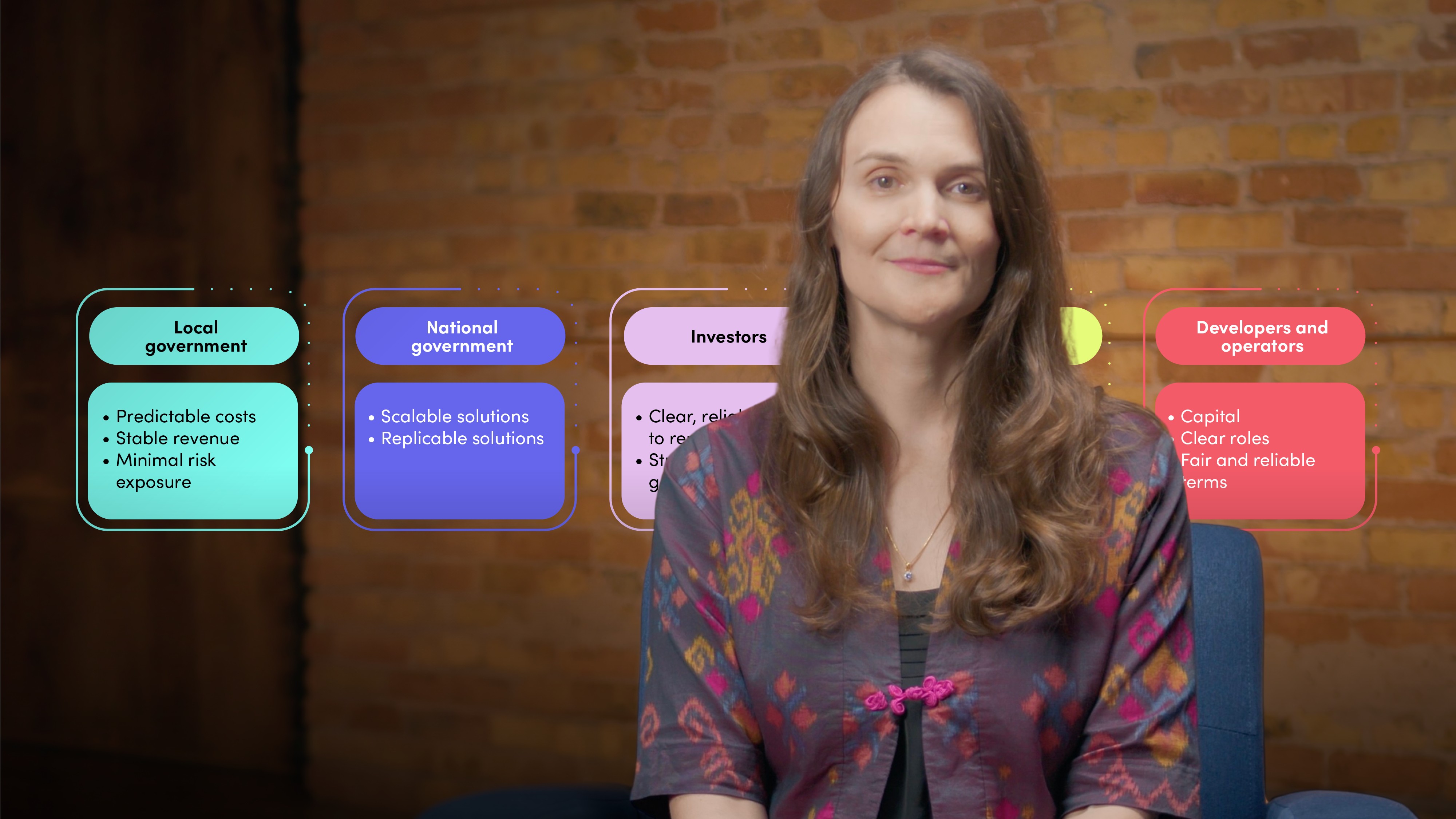
Effective financial models balance the requirements of multiple stakeholders. Local governments need predictable costs and stable revenue. National governments need scalable and replicable solutions. Investors need clear repayment pathways. Philanthropies want impact leverage and operators need capital and clear roles. Solutions include treating services like utilities, creating ring-fenced legal entities, blending capital types, and establishing revolving credit facilities to protect early-stage investors.

How can lessons from municipal waste infrastructure be applied to other sectors?
Municipal waste demonstrates that even sectors with weak economics and volatile revenue can be made investable with the right governance and financial structures. These lessons, strong operating models, stakeholder alignment, and blended finance can be applied to early education, healthcare, water, and other essential services. By proving financial viability and designing credible investment models, systems can move from pilots to national-scale impact.

Subscribe to watch

Access this and all of the content on our platform by signing up for a 7-day free trial.

Joi Danielson

Joi Danielson

Joi Danielson is a transformation leader with over 15 years of experience driving complex, high-stakes system change. She began her career as a consultant at McKinsey, later became a Partner at Systemiq, and now serves as Managing Partner of Vital Ocean. Joi specialises in turning ambitious ideas into practical, lasting outcomes that deliver real impact at scale, while developing the leaders and partnerships needed to sustain that change.

There are no available Videos from "Joi Danielson"