







Featured Pathways

More pathways

The Science of Climate Change

Climate change is no longer a distant threat or just a possibility, it is now a reality for all of us. In this pathway, Kevin Trenberth, a renowned climatologist, delves into the science behind climate change. He first introduces the climate system, its main components and forces.

Tackling the Plastic Crisis

Plastic pollution is by far the biggest threat to our oceans and this remains an incredibly tough problem to solve. Plastic credits could potentially serve as one of the much needed solutions for this crisis.

More pathways

Book a demo

Ready to get started?

Our Platform

Expert led content

+1,000 expert presented, on-demand video modules

Learning analytics

Keep track of learning progress with our comprehensive data

Interactive learning

Engage with our video hotspots and knowledge check-ins

Testing & certification

Gain CPD / CPE credits and professional certification

Managed learning

Build, scale and manage your organisation’s learning

Integrations

Connect Sustainability Unlocked to your current platform

Featured Content

More featured content

The Scale of the Net Zero Challenge

The price of meeting net zero is estimated to be between $100-150 trillion over the next 30 years. Regardless of this cost, we need to reach net zero before climate change does irreversible damage to the environment and the economy.

ESG, Sustainability and Impact Jargon Buster

ESG, sustainability, impact… they all just mean green, right? Not quite. Despite being used often interchangeably, there are distinct differences between these terms.

More featured content

Book a demo

Ready to get started?

Featured Pathways

More pathways

The Science of Climate Change

Climate change is no longer a distant threat or just a possibility, it is now a reality for all of us. In this pathway, Kevin Trenberth, a renowned climatologist, delves into the science behind climate change. He first introduces the climate system, its main components and forces.

Tackling the Plastic Crisis

Plastic pollution is by far the biggest threat to our oceans and this remains an incredibly tough problem to solve. Plastic credits could potentially serve as one of the much needed solutions for this crisis.

More pathways

Book a demo

Ready to get started?

Our Platform

Expert led content

+1,000 expert presented, on-demand video modules

Learning analytics

Keep track of learning progress with our comprehensive data

Interactive learning

Engage with our video hotspots and knowledge check-ins

Testing & certification

Gain CPD / CPE credits and professional certification

Managed learning

Build, scale and manage your organisation’s learning

Integrations

Connect Sustainability Unlocked to your current platform

Featured Content

More featured content

The Scale of the Net Zero Challenge

The price of meeting net zero is estimated to be between $100-150 trillion over the next 30 years. Regardless of this cost, we need to reach net zero before climate change does irreversible damage to the environment and the economy.

ESG, Sustainability and Impact Jargon Buster

ESG, sustainability, impact… they all just mean green, right? Not quite. Despite being used often interchangeably, there are distinct differences between these terms.

More featured content

Book a demo

Ready to get started?

Book a demo

Ready to get started?

How to Build Coalitions and Trust

How to Build Coalitions and Trust

Joi Danielson

System Change and Transformation Specialist

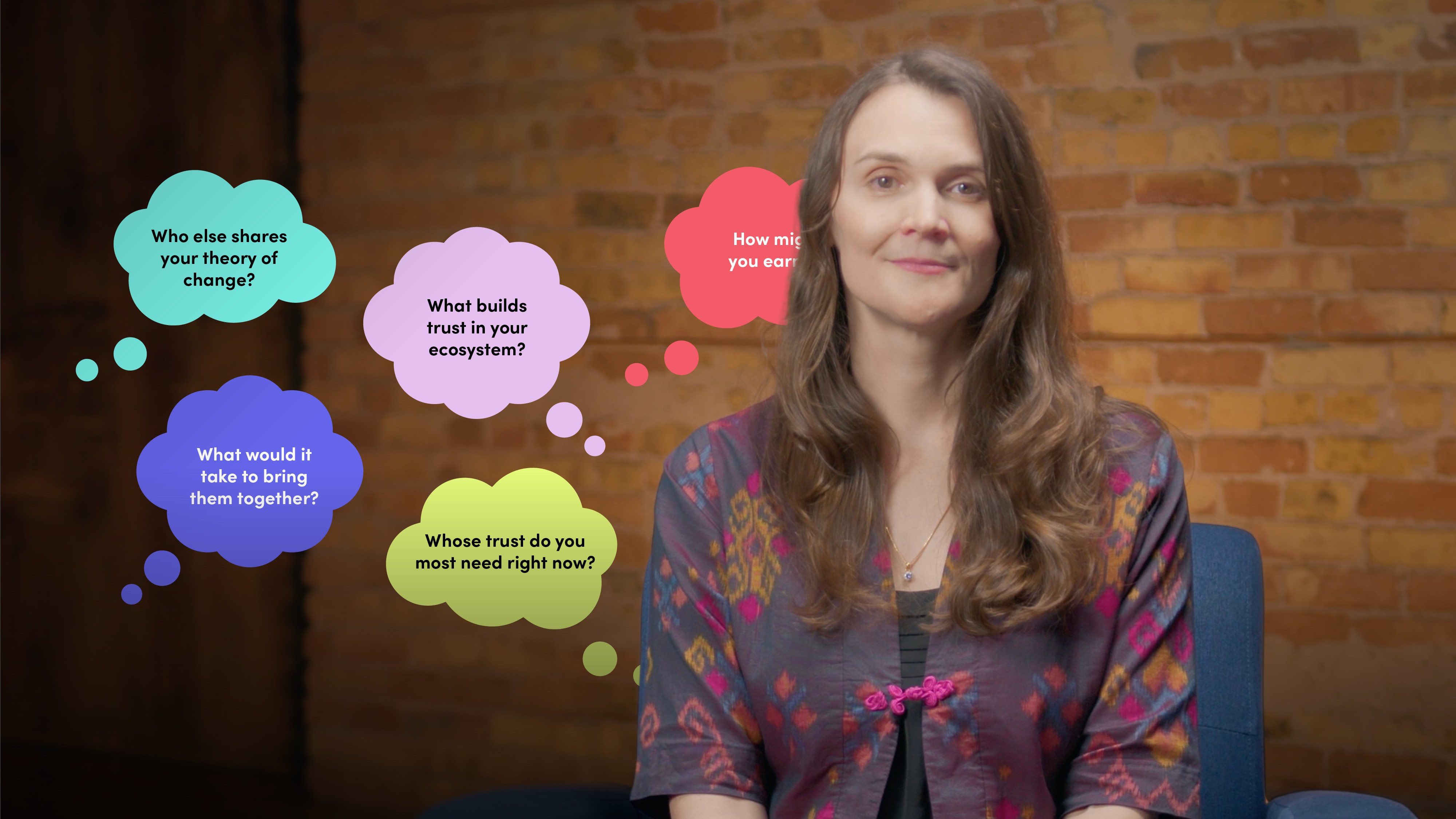
You can’t make change without people. And you can’t get people without trust. Watch Joi Danielson as she explains how to build solid coalitions and how to win trust.

You can’t make change without people. And you can’t get people without trust. Watch Joi Danielson as she explains how to build solid coalitions and how to win trust.

Subscribe to watch

Access this and all of the content on our platform by signing up for a 7-day free trial.

How to Build Coalitions and Trust

10 mins 5 secs

Key learning objectives:

  • Outline how to build working coalitions

  • Understand why trust is vital in coalition building

  • Explain the value of creating a partner ecosystem

Overview:

Coalitions work because no single actor can change a system alone. Each institution usually focuses on only one part of the system. By bringing these actors together, coalitions coordinate action across different sectors and pressure points. Trust is essential because it enables actors from different institutions and sectors to coordinate effectively. Without trust, partners may withhold critical knowledge, disengage, or feel overshadowed. Trust is built through consistent actions - communicating openly, following through on commitments, being transparent about intentions, and ensuring partners feel recognised and credited.

Subscribe to watch

Access this and all of the content on our platform by signing up for a 7-day free trial.

Summary
How can coalitions be structured to effectively shift systems?
Coalitions work because no single actor can change a system alone. Each institution usually focuses on only one part of the system. By bringing these actors together, coalitions coordinate action across different sectors and pressure points. Effective coalitions are designed, not improvised. They start with a shared north star, a clear theory of change, and an aligned roadmap for action. 

What roles do different institutions play within a coalition?
  • Academics study root causes, build evidence, predict consequences, co-create solutions, and advise policymakers.
  • NGOs mobilise the public, build urgency, and sometimes pilot solutions.
  • Consultants write accessible reports that set agendas, though they rarely implement solutions at scale.
  • Companies deliver products or services and can innovate within systemic constraints.
  • Social enterprises create scalable, viable solutions in parts of the system that can sustain themselves economically.
  • Governments set the rules and enforce policies that support the public good.

Why is trust considered the currency of change?
Trust is essential because it enables actors from different institutions and sectors to coordinate effectively. Without trust, partners may withhold critical knowledge, disengage, or feel overshadowed. Many local actors have experienced being used or having their contributions undervalued, which makes trust-building delicate. Newcomers should slow down, listen carefully, respect existing work, and consistently demonstrate reliability and transparency to earn trust.

How can you build trust?
Trust is built through consistent actions - communicating openly, following through on commitments, being transparent about intentions, and ensuring partners feel recognised and credited. Coalitions thrive when roles are clear, decisions are shared, and all partners feel comfortable with how their contributions are represented. 

How can coalitions maintain momentum despite changing contexts or leadership?
A resilient coalition anticipates shifts in priorities, personnel, or leadership. Designating a core secretariat or small team to manage operations helps maintain continuity. Building flexible structures allows coalitions to adapt without losing sight of their shared goals. Successes should be highlighted with partners front and centre and making participation meaningful but manageable ensures senior leaders and busy stakeholders can contribute without feeling overburdened.

How does building an ecosystem of partners amplify impact?
A partner ecosystem emerges when initial pilots or coalition activities create a network of trusted relationships and active engagement. This ecosystem provides a sandbox where future collaborators can test ideas, run pilots, and apply their own theories of change. It attracts new talent, funding, and energy, enabling collective progress beyond the efforts of any single organisation. By creating a shared platform, multiple actors can move forward simultaneously, strengthening the bonds between institutions while tackling complex system challenges.

Subscribe to watch

Access this and all of the content on our platform by signing up for a 7-day free trial.

Joi Danielson

Joi Danielson

Joi Danielson is a transformation leader with over 15 years of experience driving complex, high-stakes system change. She began her career as a consultant at McKinsey, later became a Partner at Systemiq, and now serves as Managing Partner of Vital Ocean. Joi specialises in turning ambitious ideas into practical, lasting outcomes that deliver real impact at scale, while developing the leaders and partnerships needed to sustain that change.

There are no available Videos from "Joi Danielson"