What is the EU Taxonomy, and why is it important?
The EU Taxonomy is a classification system that defines environmentally sustainable economic activities. Introduced in 2020, it supports the EU Green Deal by improving transparency, reducing greenwashing and encouraging investment in sustainable activities.
How does the EU Taxonomy work?
The Taxonomy assesses economic activities against six environmental objectives, covering climate change, water, circular economy, pollution and biodiversity. To be Taxonomy-aligned, an activity must make a substantial contribution to at least one objective, meet the relevant technical screening criteria, do no significant harm to the others and comply with minimum social safeguards.
What must companies disclose?
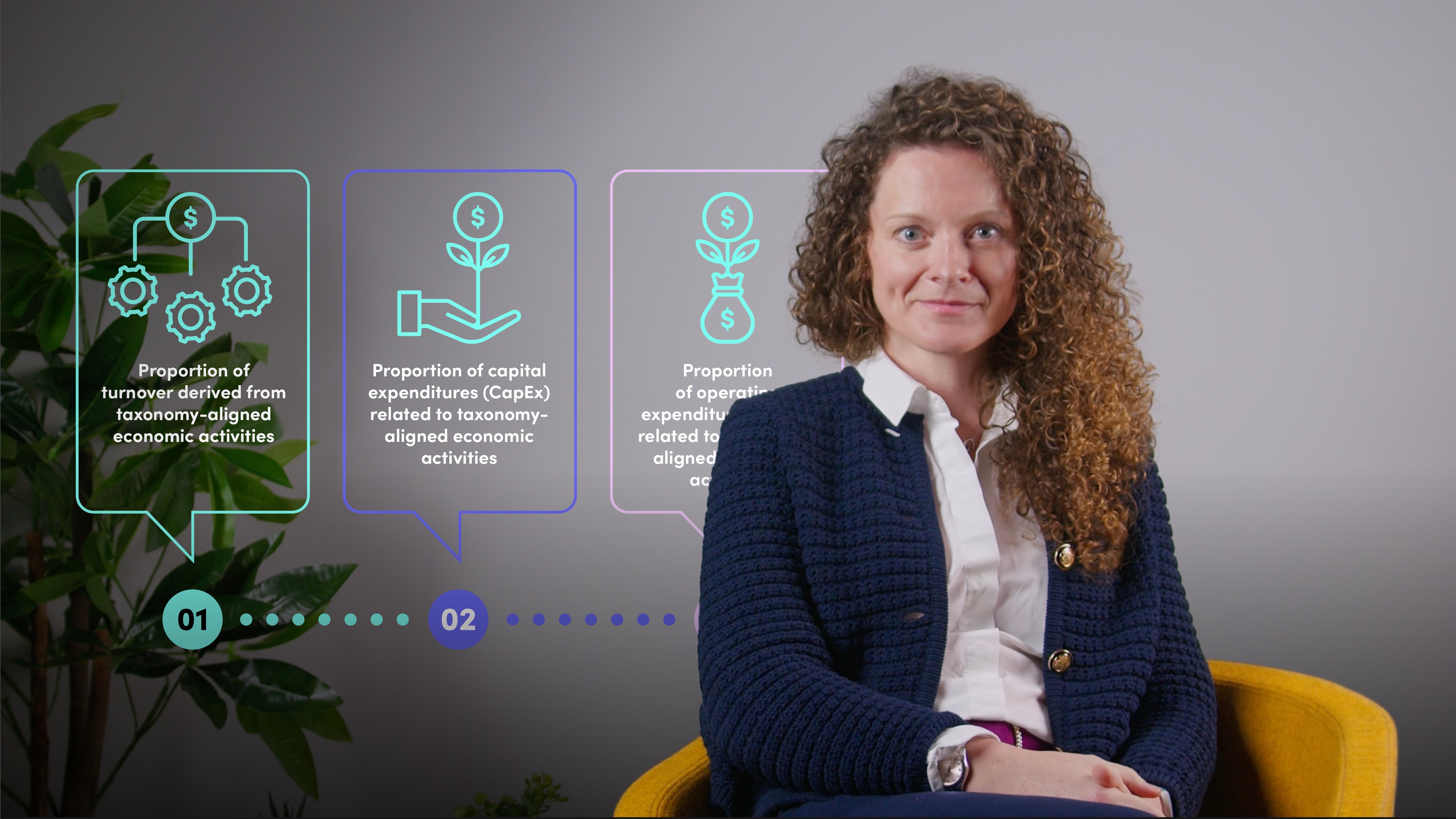
Companies subject to Taxonomy reporting requirements disclose the proportion of their turnover, capital expenditure (CapEx) and operating expenditure (OpEx) associated with Taxonomy-aligned activities. These indicators help investors and lenders assess the environmental sustainability of business activities.
What has changed under the EU Omnibus reforms?
The 2026 Omnibus reforms narrow mandatory sustainability reporting requirements, with revised CSRD thresholds of more than 1,000 employees and €450 million in annual net turnover. They also simplify reporting requirements, introduce greater flexibility and provide protections for smaller companies and suppliers. Separate changes have simplified EU Taxonomy disclosures.
What options are available for smaller companies?
Companies outside mandatory sustainability reporting requirements can use voluntary standards based on the VSME framework. Smaller suppliers also benefit from protections against excessive sustainability information requests from larger companies.
How can lenders use the EU Taxonomy?
Lenders can use the Taxonomy to assess the sustainability of their portfolios, develop green financial products, set sustainable lending targets and identify environmental risks and opportunities. It also provides a common framework for advising clients on improving their environmental performance and accessing sustainable finance.
What challenges remain?
Applying the Taxonomy requires companies to interpret detailed technical criteria and collect reliable data about their activities. Despite these challenges, it remains an important framework for improving transparency and supporting sustainable investment.
Add the missing two environmental objectives