















AI Roadmap for Sustainability

Justin Keeble
Founder: Nyamira Labs
Turn AI experimentation into sustainable capability. Learn how to avoid common implementation mistakes and build from quick wins to operational integration and strategic transformation.

Turn AI experimentation into sustainable capability. Learn how to avoid common implementation mistakes and build from quick wins to operational integration and strategic transformation.
Subscribe to watch
Access this and all of the content on our platform by signing up for a 7-day free trial.
AI Roadmap for Sustainability
5 mins 16 secs
Key learning objectives:
Recognise common barriers that prevent AI initiatives from scaling successfully
Apply the three-horizons model to develop a practical AI roadmap
Identify actions that can build confidence, capability and cross-functional support for AI adoption
Overview:
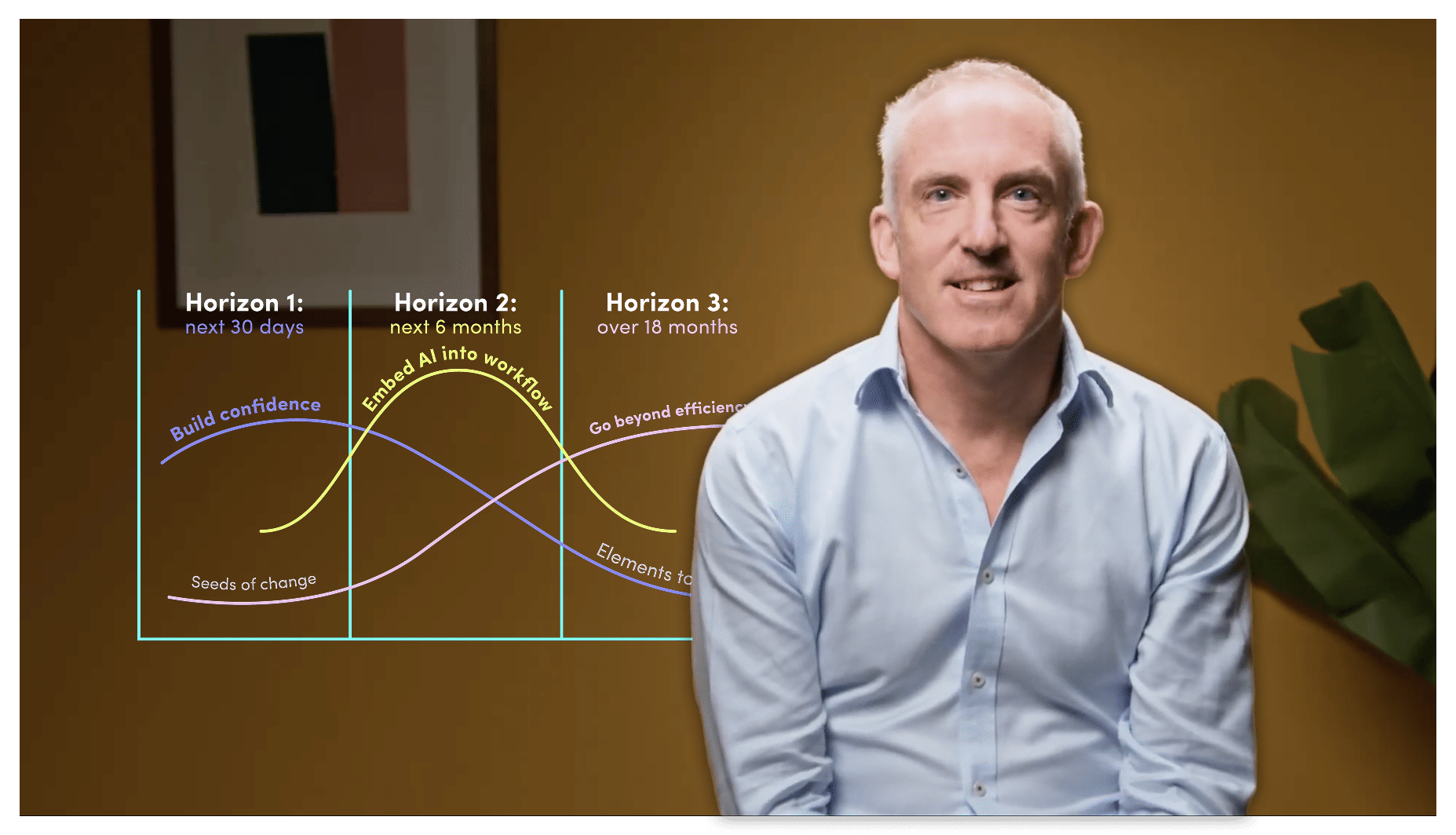
The three-horizons model provides a practical path: build confidence through tactical wins in the first 30 days, embed AI into real business processes over six months, then pursue strategic transformation over a longer horizon. Small, credible successes create the confidence, time and evidence needed to support bigger moves.
Subscribe to watch
Access this and all of the content on our platform by signing up for a 7-day free trial.
Common failure patterns include starting too big, creating a business case that matters only to sustainability, lacking clear ownership and governance, and treating AI as a technology project rather than an ongoing organisational capability. Waiting for AI to become perfect can also prevent organisations from learning while the technology evolves.
What is the value of quick wins?
Small, practical use cases can demonstrate value, build confidence and create time savings without requiring major transformation. Drafting documents, summarising reports or analysing routine information can provide an accessible starting point using tools the organisation already has.
What should happen in the first 30 days?
The first horizon is about building confidence. Identify tactical productivity opportunities, test them in practice and use the results to understand what works. The aim is to generate credible proof of concept and build enthusiasm for further adoption.
How does AI move from experimentation into everyday operations?
Over around six months, the focus shifts to embedding AI into real business processes, such as emissions data collection, supplier engagement or reporting. This requires closer collaboration with AI and IT teams, as well as appropriate governance, ownership and data foundations.
When does AI become transformational?
Once AI is embedded into how the organisation works, attention can move beyond efficiency towards strategic transformation. Over a longer horizon, organisations can explore how AI might create new products, improve customer experiences or unlock new ways of delivering sustainability value.
How can a sustainability team start building momentum?
Choose one small, real tactical use case and test it. Then bring in a colleague outside sustainability, particularly from a function where you want to create impact. AI will only scale when it moves beyond being a sustainability initiative and becomes part of how the wider business works.
Subscribe to watch
Access this and all of the content on our platform by signing up for a 7-day free trial.

Justin Keeble
There are no available Videos from "Justin Keeble"